Role
UX Designer

Supporting Case Study
Improving a complex filing experience inside an inherited, constraint-heavy government service.
This project focused on improving the incorporation flow in the Online Filing Center for business users and registered intermediaries. The challenge was to make a complex, high-stakes transaction easier to navigate without oversimplifying the legal and procedural requirements behind it.
I stepped into the project after it had already been started by another team and inherited an unfinished prototype without the original source file or full design context. From there, my role was to understand the flow, identify where the experience could be improved, and help shape it into a clearer, more usable service.

Role
UX Designer
Scope
Flow refinement, interaction design, content structure, design QA, implementation support
Context
Government digital service, transactional flow, inherited design work
Type
Supporting case study
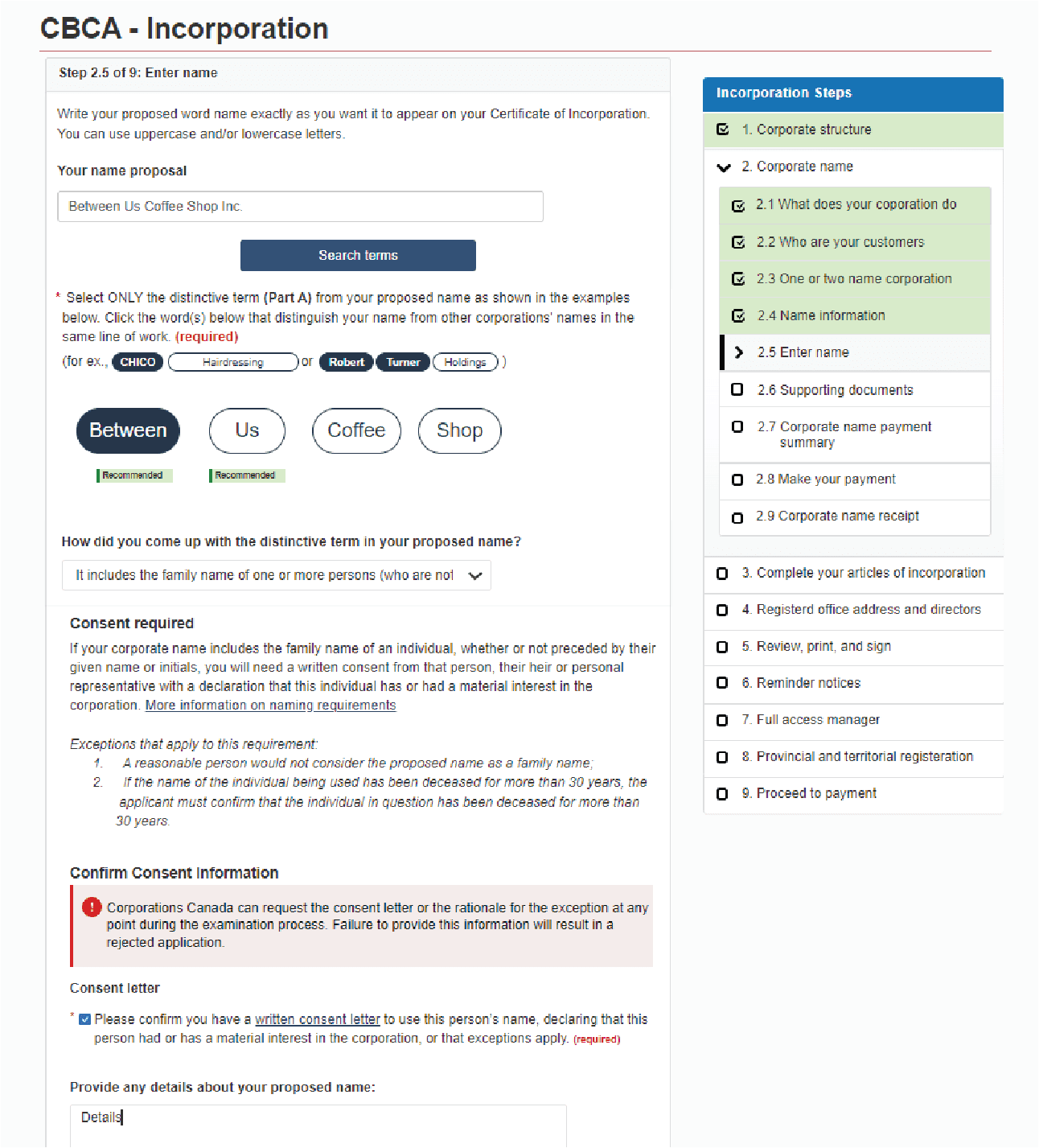
This project began with an unfinished prototype that had already been created by another design team. I only had access to the public prototype, not the original working file, which meant I had limited visibility into earlier decisions and no real record of how the flow had evolved.
That changed the nature of the work. Instead of starting fresh, I first had to understand what was already there, identify where the flow still needed clarification, and work with the business team to refine it into something more usable. I mapped the experience in detail so I could see the pages, branching logic, and decision points more clearly before making changes.
It was a practical design problem: stepping into an in-progress service, building enough structure around it to move confidently, and improving the parts of the experience that mattered most.
This project had real constraints from the start. The flow was already long, so improving the experience could not come at the cost of adding unnecessary pages, extra clicks, or more time to complete the process. At the same time, I was working from a pre-existing prototype without the original design context, which made it harder to understand why earlier decisions had been made.
There was also no access to the research artifacts from the prior team, even though earlier research had reportedly been done. That meant I had to rely on design principles, pattern consistency, and close collaboration with the business team to make practical improvements within the space available.
That kind of constraint-heavy work is common in large service environments. The challenge is not always to reinvent the experience. Often, it is to understand where the design still has room to help and make the flow clearer, steadier, and easier to complete without disrupting what already has to remain in place.
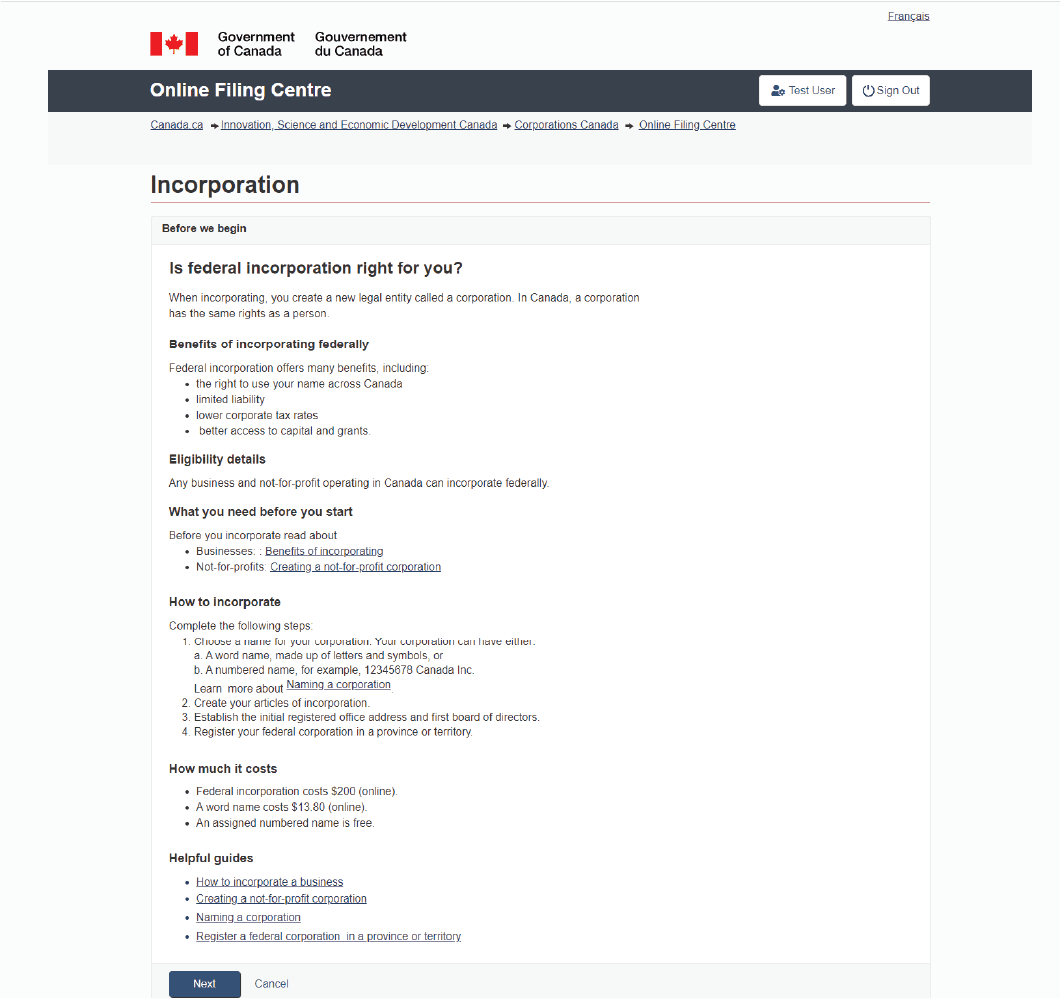
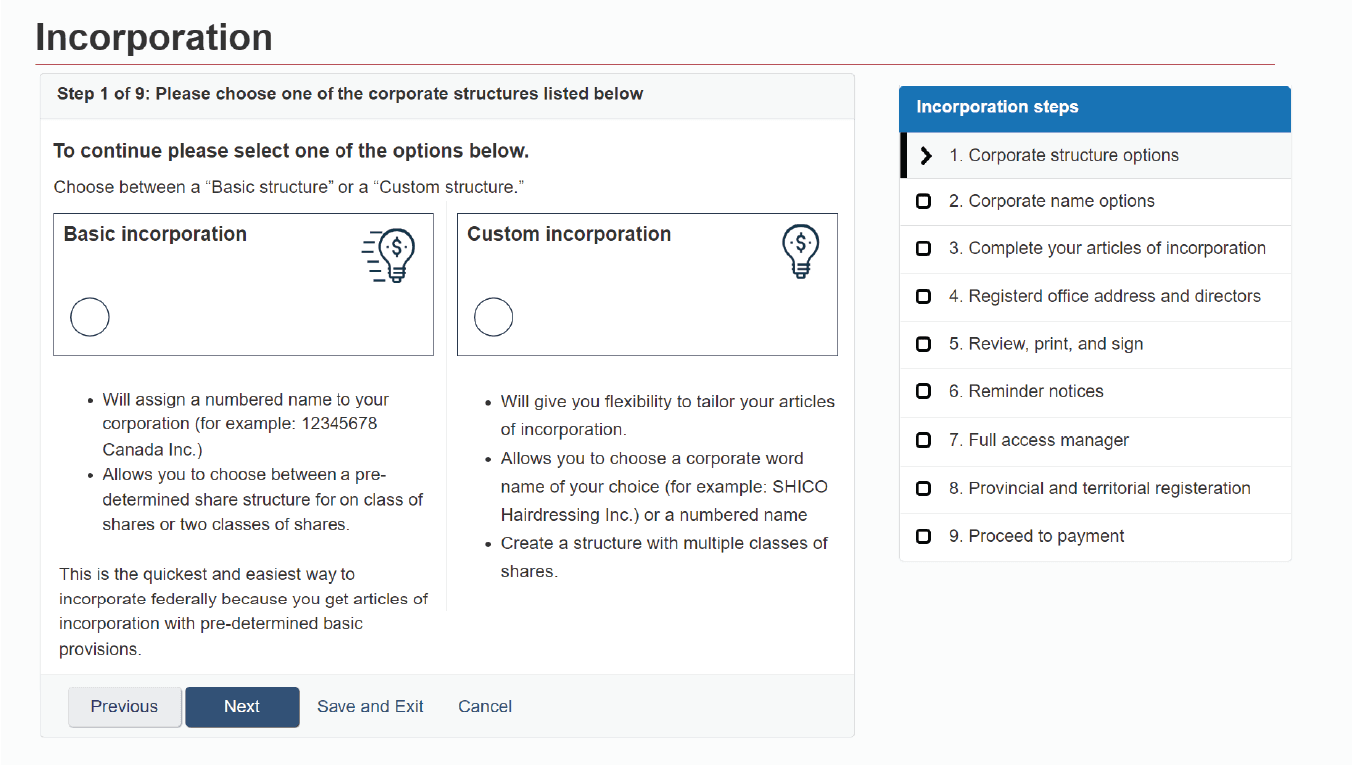
Once I had a clearer picture of the inherited flow, the focus shifted to making the experience easier to move through. The project goals were to establish a more intuitive incorporation flow, streamline the experience, and give users enough information to complete the process more independently, with less need for support.
That meant improving the flow without pretending the process itself was simple. Incorporation is a detailed transaction, and the design still needed to carry the weight of that complexity. My role was to make the experience easier to follow by refining the structure, identifying places where the flow could be tightened, and improving how information was presented from step to step.
A large part of the work was helping users stay oriented. In a multi-step service like this, clarity matters as much as speed. The design needed to support progress, reduce unnecessary friction, and make the process feel more manageable without removing the detail the task required.
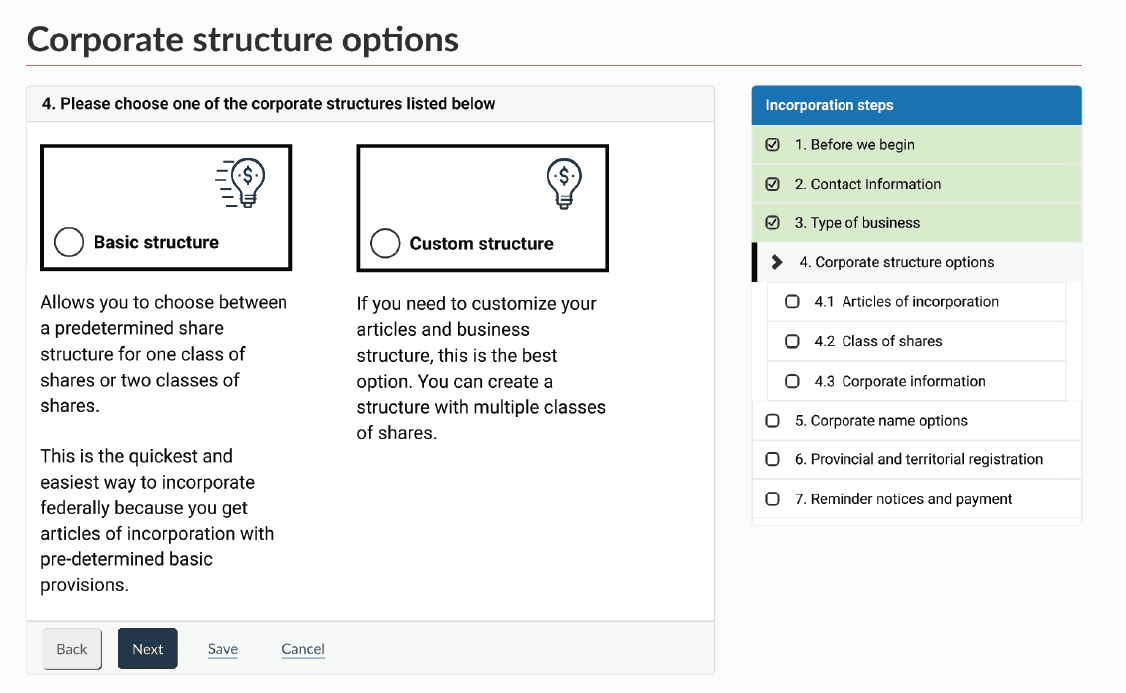
One part of the flow where I made a more direct design contribution was the section that explained how users can name a corporation and what steps follow from that choice. During prototyping, I identified places where the experience could be improved both in terms of usability and alignment with existing standards, and I redesigned that page to make the information easier to understand and act on.
This was a good example of the kind of work the project required overall. I was not replacing the full structure of the service, but improving key parts of the experience where users needed clearer guidance. In this case, the goal was to make a concept-heavy step feel more structured and easier to move through, without removing the detail users needed to make an informed decision.
It also helped show where focused UX improvements could have real value inside a constrained system. Even when the broader flow was already established, there was still room to make individual steps clearer, more consistent, and easier to complete with confidence.
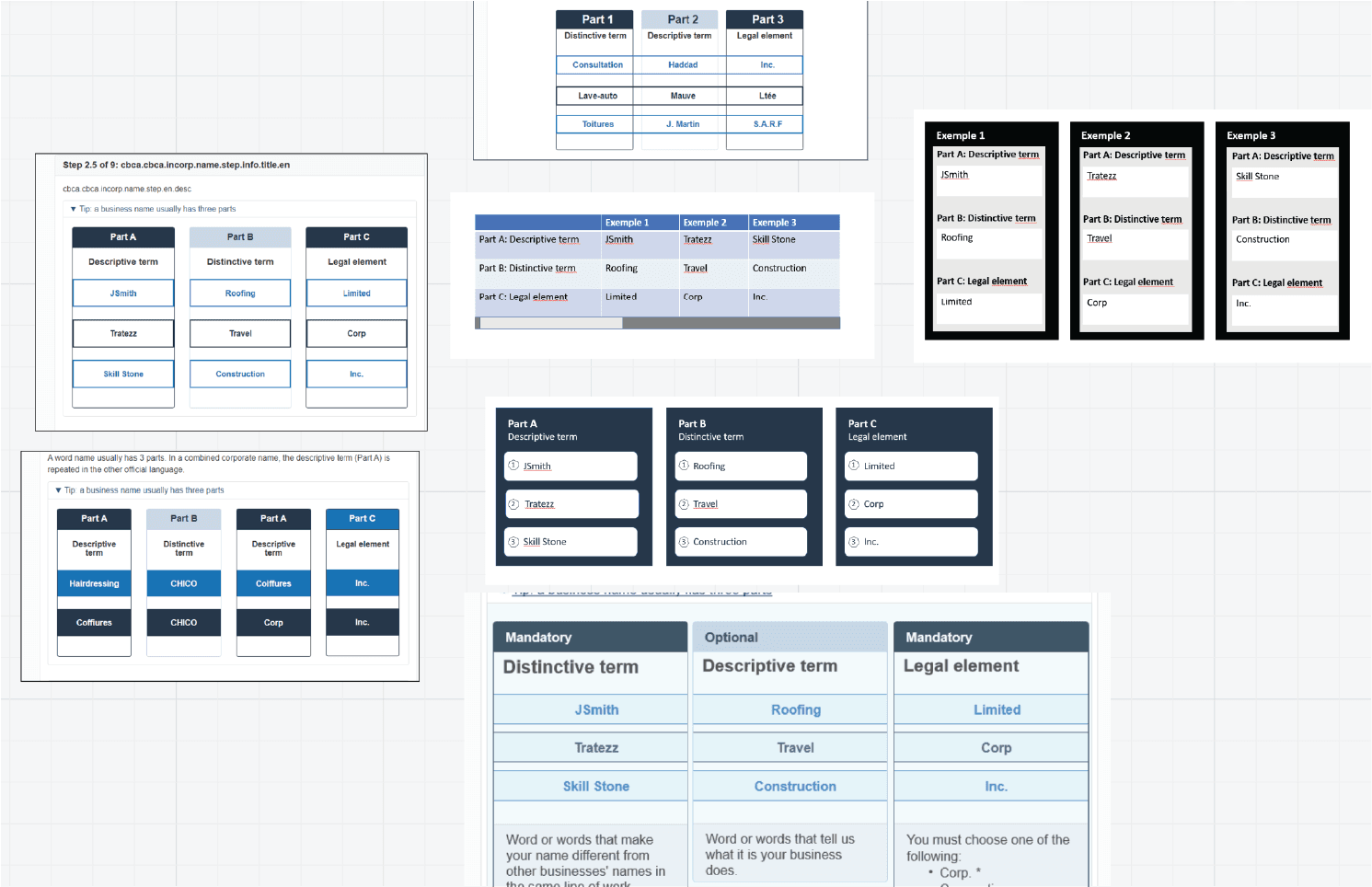
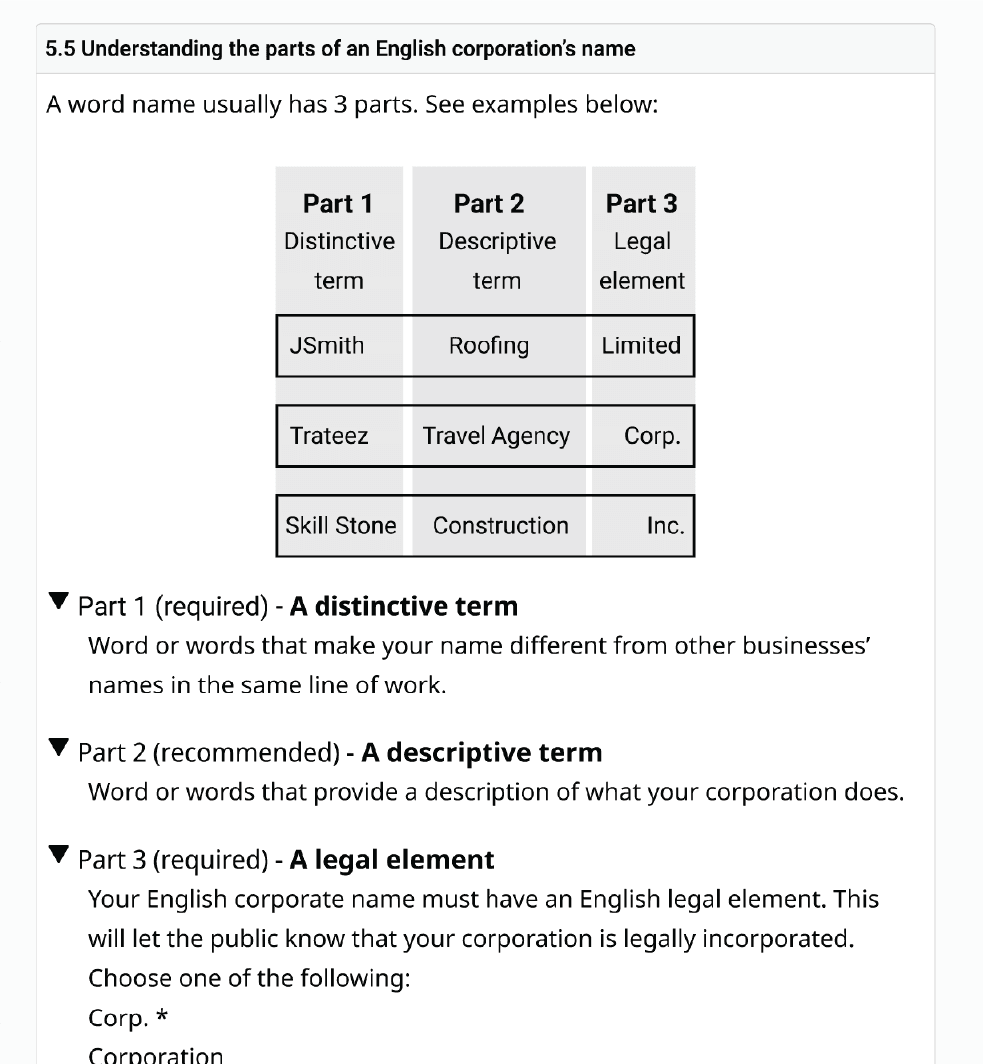
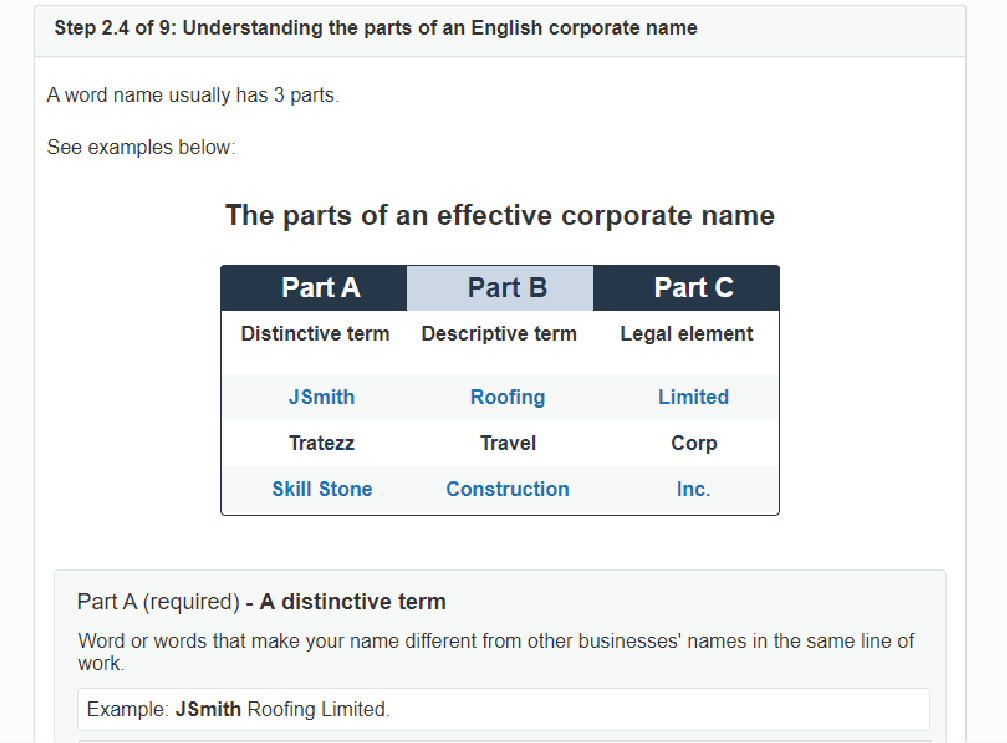
I worked closely with the business lead and Senior Project Lead throughout the iteration process, sharing updated prototype links through Jira, gathering feedback on both design and content, and helping move the work toward stakeholder approval. As the designs evolved, that collaboration helped turn an inherited prototype into something more refined, reviewable, and ready to move forward.
I also supported implementation directly. While most of the flow aligned with the existing Corporations Canada design system, some newer elements did not yet have ready-made HTML/CSS templates. To help bridge that gap, I created front-end code to support developers as they translated the designs into the product.
That part of the project mattered to me. It meant the work did not stop at prototypes. I was also helping carry the design through the practical realities of implementation so the final experience stayed aligned with the intended UX.
The final flow was well received by business partners, and the work helped improve the user experience within a project that came with clear structural and procedural limits.
For me, the value of this project is not in claiming ownership over an entire service. It is in showing the kind of design work that often matters in large organizations: stepping into a complex system midstream, making sense of what is already there, and finding practical ways to make the experience clearer and easier to complete.
It also reflects a type of UX work I enjoy — improving important systems in realistic conditions, where constraints are part of the job and thoughtful refinement can still make a meaningful difference.